The first time I read Gone With the Wind, I was almost eleven years old—far too young, probably, to be trusted with Scarlett O’Hara. I was utterly and completely fascinated by her shenanigans, her nerve, her mouth, her refusal to behave the way girls were supposed to. I didn’t just read that book; I worried it, dog-eared it, carried it from room to room until the spine surrendered. I read it so hard I quite literally read it to pieces, and I taped it back together. I’ve read it again and again, and ever since, a copy has stayed in my possession—almost forty-five years and counting.
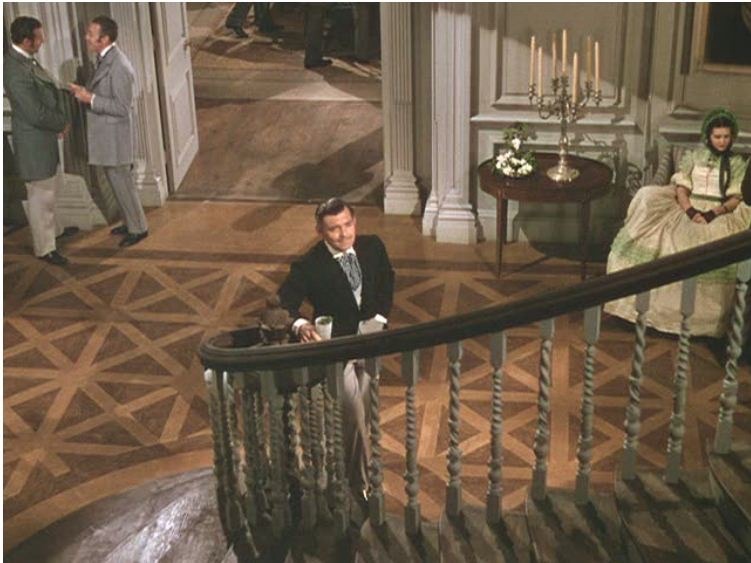
Now I’m sure everyone is wondering how a little Black girl became obsessed with a novel about a white, spoiled Southern belle. Fair question. The fascination didn’t start with the book at all—it started on the living-room television. CBS used to show Gone With the Wind every year and I think it came on the spring of 1981. I watched it with my mother and it was so romantic to my young naive ass.
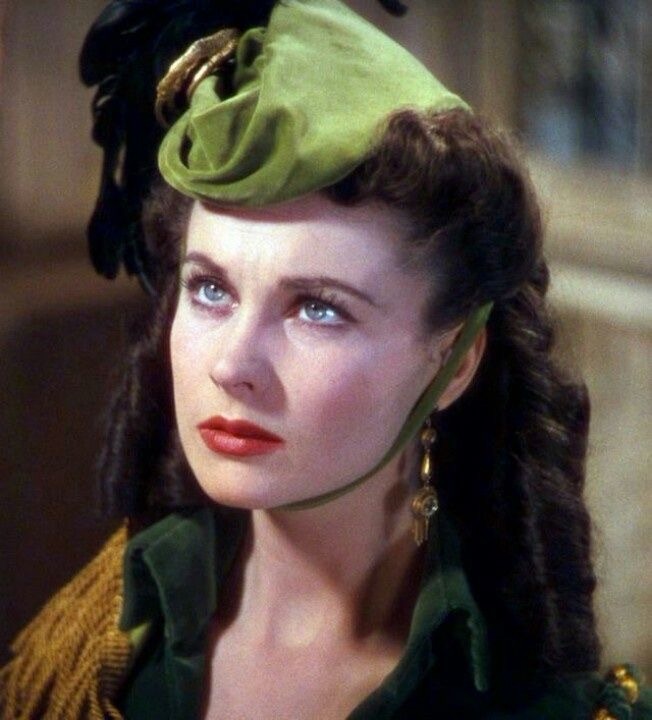
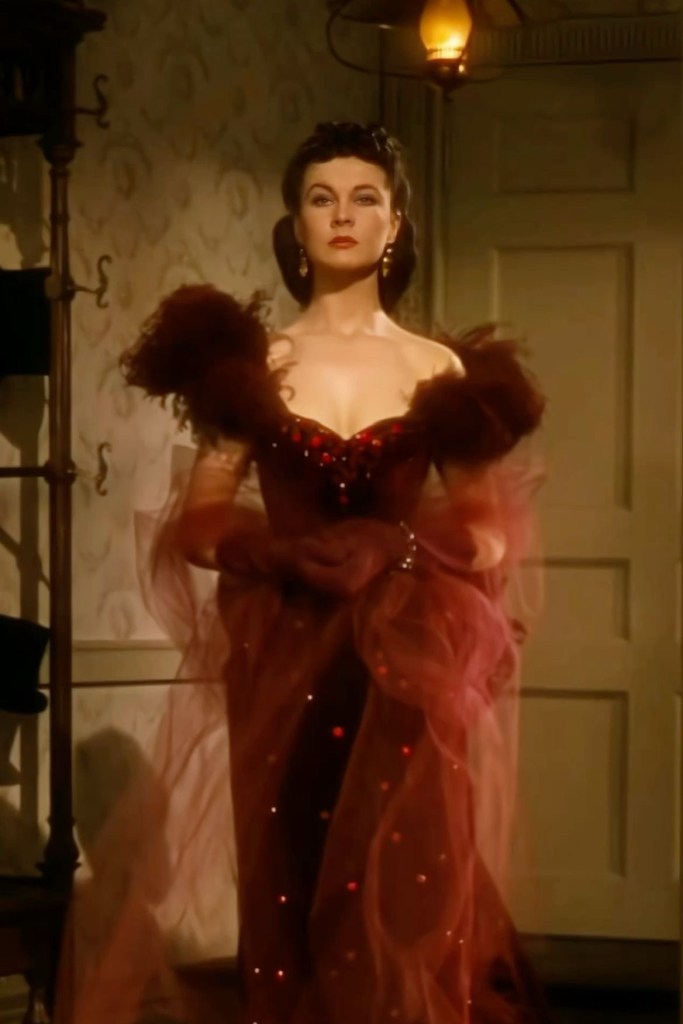
Wearing the dress and hat made from curtains
Right after I saw the movie, I learned that my cousin Cleo had a copy of the book, and I sweated her for months to let me read it. Begged. Hovered. Lingered in her personal space like a literary mosquito. And finally—mercifully—she gave in. She handed it over on Labor Day 1981, probably thinking it would bore me to tears. Instead, it lit a fire. One look at that thick, serious book and I was gone. Hooked. It was the first time I read a book in which the main character was basically an antihero. I didn’t know female characters could be so bad!
Because Scarlett was a trifling-ass woman, no way around it. She had no use for other women and treated them like rivals in a hunger game she invented in her own head—including her own sisters. Loyalty never stood a chance against her survival instincts.
She stole her sister Suellen’s long-standing fiancé, Frank Kennedy, and married him not out of love, but out of cold financial necessity. Tara was on the line, the mortgage was due, and Scarlett needed money—fast. So she lied. She told Frank that Suellen had already married Tony Fontaine, sealing the deal with a convenient fiction and a straight face.
The lie unraveled when Tony turned up in Atlanta very much unmarried, very much footloose, and undeniably fancy free. He never confronted Scarlett and told himself that she must’ve wanted him real bad. Poor fool.
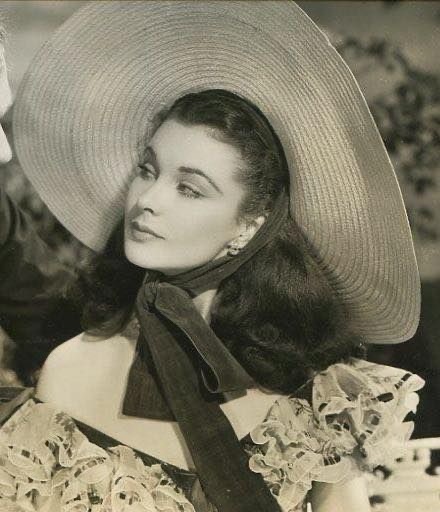
Believe it or not, Scarlett had some admirable qualities. She wasn’t book-smart, but she possessed a cold, hard intelligence that allowed her to survive when others could not. What she lacked was the common sense to see that Ashley was never the man for her. She loved the image of who she wanted him to be instead of the reality—and it cost her dearly.
A few months ago, I decided to reread Gone with the Wind, and I cackled like a gleeful hen who had found some extra feed. Margaret Mitchell really did give us some of the most savage lines in American literature. Take this exchange:
“She sho dressed up fine an’ got a fine cah’ige an’ coachman,” she muttered. “Ah doan know whut de Lawd thinkin’ ‘bout, lettin’ de bad women flurrish lak dat w’en us good folks is hongry an’ mos’ barefoot.”
And Scarlett, without missing a beat, fires back:
“The good Lord stopped thinking about us years ago.” Whew.
This exchange takes place between Mammy and Scarlett during one of Scarlett’s many moral gymnastics routines. Their relationship is a complicated one—so tangled that many scholars have tried to unravel it without stepping on too many toes.
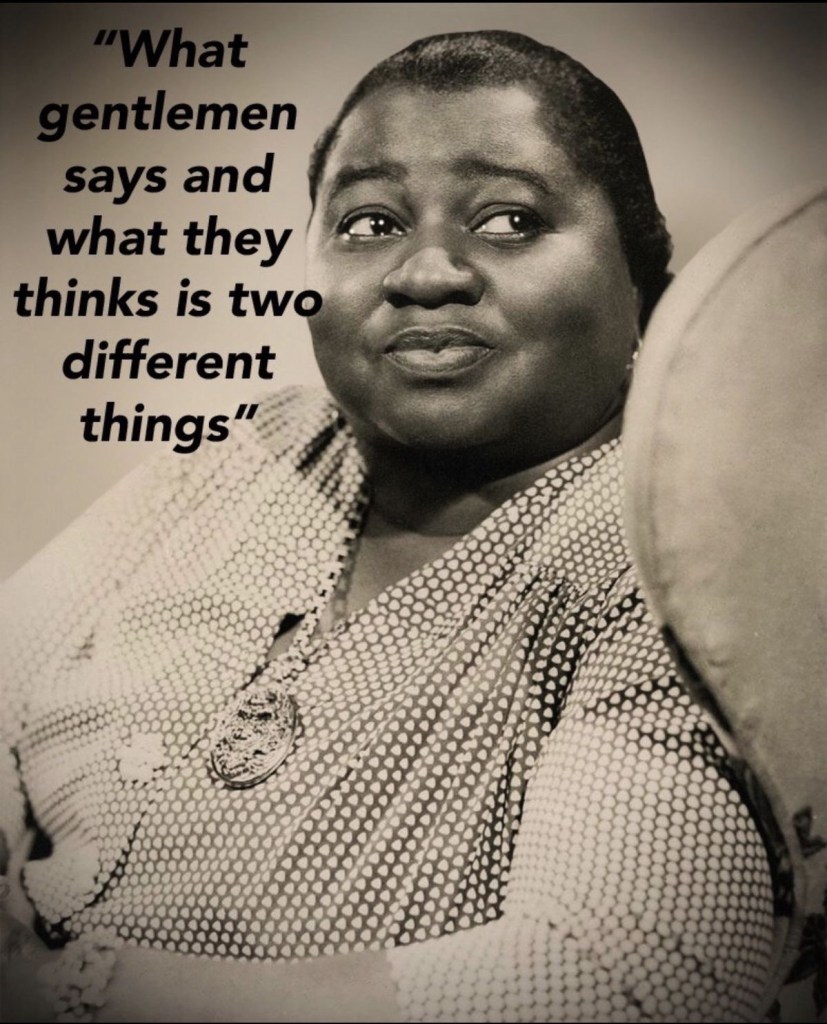
In so many ways, Mammy was a goon—and I mean that with respect. Enslaved, yes, but never small. She feared no one, regardless of race. Never timid. She didn’t allow anyone to bully her, not even Scarlett, who tried everybody. Mammy said what she said, meant what she meant, and stood ten toes down in a world designed to crush her spine. She scolded, strategized, and survived with a kind of authority that didn’t come from permission. It came from knowing exactly who she was in a system that pretended she wasn’t human at all.
So Very True
As a little Black girl watching and reading, I knew she was special. Before I understood the violence of the stereotype, I recognized the power underneath it—the way Mammy took up space, spoke her mind, and refused to be reduced. Later, I’d learn how dangerous that trope was, how it served white comfort at the expense of Black truth. But back then, I saw a woman who could not be pushed around. And that mattered. It still does.
Mammy is Scarlett’s moral ballast. She raises her, scolds her, sees straight through her nonsense, and loves her anyway. She knows Scarlett’s tricks before Scarlett finishes thinking them. When Mammy lectures, it isn’t polite—it’s raw and cuts to the soul. She disciplines Scarlett not just for bad behavior, but for bad character. In many ways, Mammy understands Scarlett better than Scarlett understands herself.
The Ultimate Vixen
This book didn’t belong to me, and lord knows, it wasn’t written for me—but once it was in my hands, it was changed. I was changed. I read it without permission, without filters, without the adult understanding that would come years later. I read it as a little girl hungry for story, for drama, for women who refused to disappear. Time would eventually teach me how tangled that story really was—what it erased, what it romanticized, what it got wrong. But that first reading taught me something just as important: I was a reader. A deep one. A stubborn one. A girl who could enter any world through words and come back carrying questions. And I’ve been doing that ever since—reading, reckoning, reclaiming—one story at a time.
 The Potty Mouth Granny
Leave a comment