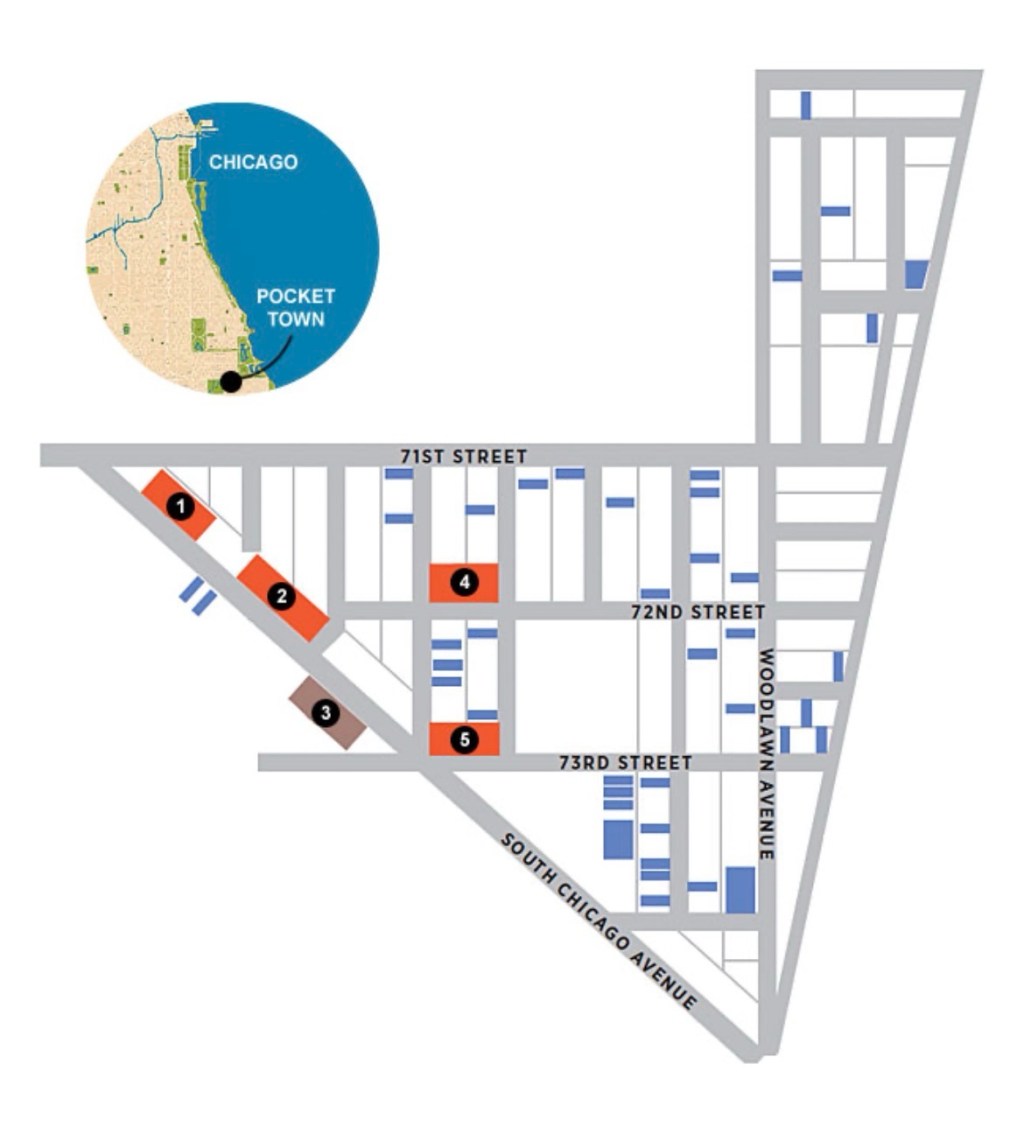
Pocket Town in Chicago is a place name for a very specific little corner of the city’s South Side — it’s not a restaurant or bar, but a neighborhood identity in its own right. This pocket of Chicago life has a rich and complicated vibe, stitched into the larger fabric of Greater Grand Crossing neighborhood. This neighborhood is known for its unique geography, with limited entry and exit points, and as the childhood home of Lands’ End founder Gary Comer—who later invested heavily in its revitalization.
It’s also where I grew up. My Aunt Maggie bought a two-flat at 7246 South University in 1963, and that building became the family base. For thirty years, it held us — holidays, arguments, laughter, grief, babies being born and elders crossing over. It was our anchor until it was sold in 1993.
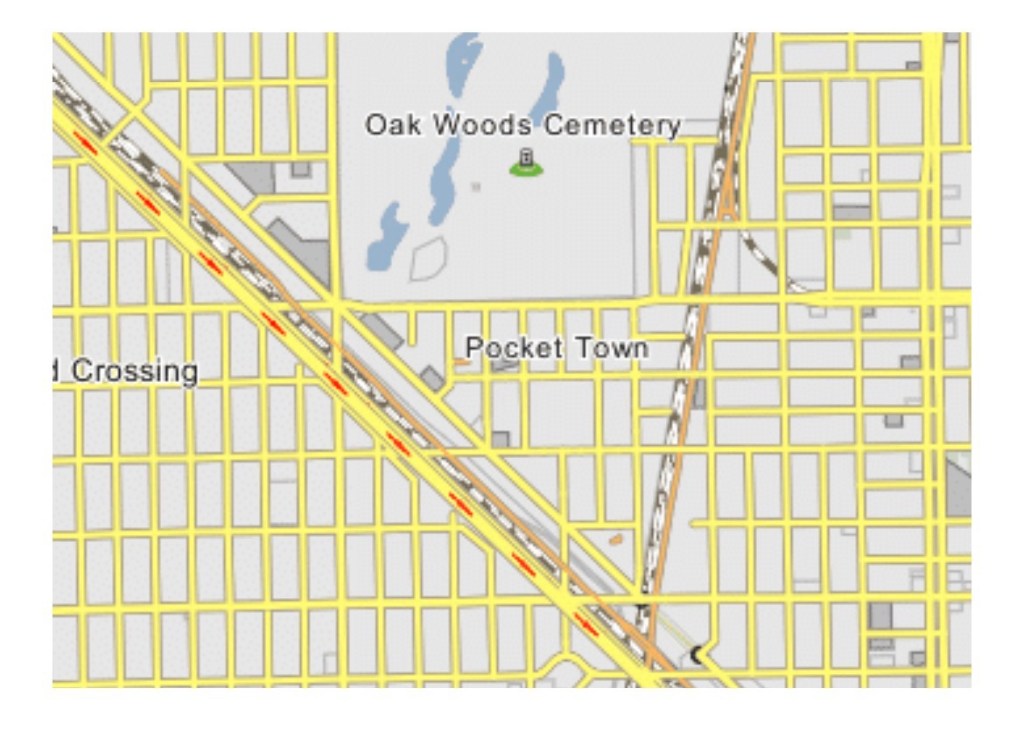
Pocket Town isn’t just a small niche tucked within Greater Grand Crossing, bordered by Oak Woods Cemetery—it’s a living, breathing piece of history, full of stories, deep roots, and a legacy that refuses to be contained by neat lines on a map. It’s bike rides. It’s front-porch gossip. It’s sirens at night. It’s the smell of somebody frying chicken on a summer afternoon. It’s watching who made it out and who didn’t.
Growing up in a place like that does something to you. It makes you observant. Hyper-aware. You learn to read people fast. You learn geography through survival. You learn sociology before you ever take Introduction to Sociology.
And here’s the truth most people miss: neighborhoods like Pocket Town are not “problems.” They are ecosystems. They are responses to policy, redlining, economic abandonment, railroad lines slicing up space, and the way cities historically decided which communities deserved investment and which ones didn’t. Chicago didn’t accidentally become segregated. That was engineered. Pocket Town sits inside that larger story.
I came out of there and built a life of thought, writing, reflection. That’s not random. That’s resilience mixed with curiosity. A lot of people from tight neighborhoods either get swallowed by them or carry them like armor. I turned it into narrative fuel.
There’s something powerful about claiming where you’re from without romanticizing it and without apologizing for it. Pocket Town is a part of me. It’s a part of my intellectual DNA.
Cities are strange creatures. They build small worlds inside larger worlds. And sometimes the smallest pockets produce the loudest thinkers.
 The Potty Mouth Granny
Leave a comment