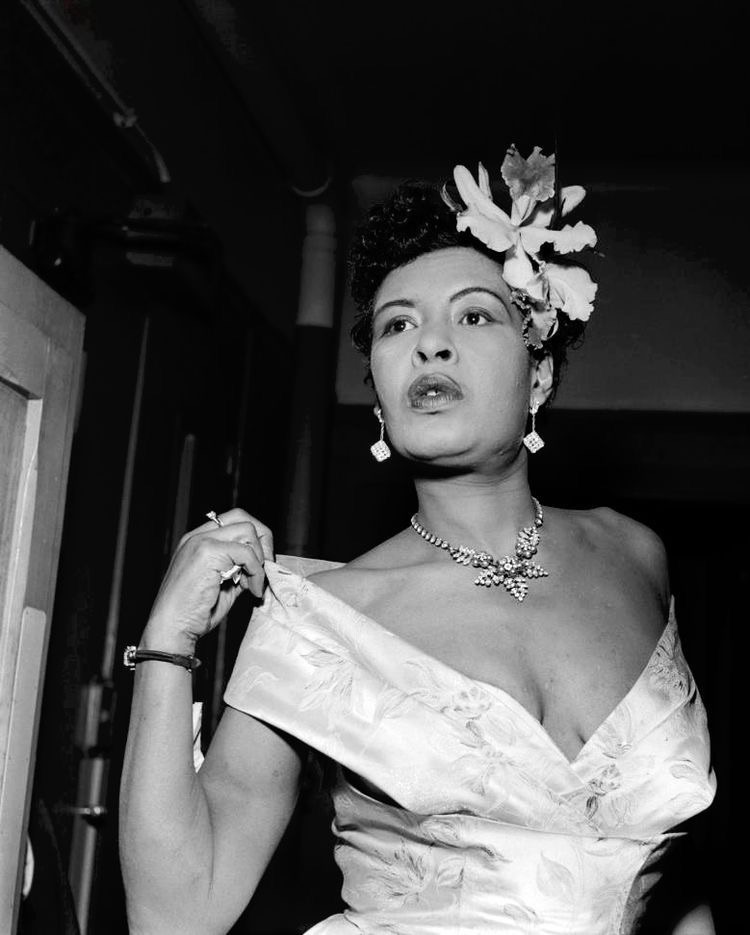
The way Billie Holiday was hounded by the government literally until the day she died is one of the biggest tragedies in Black history.
When she sang “Strange Fruit,” that wasn’t just a song. It was an indictment. A slow, haunting autopsy of America. Written by Abel Meeropol, but carried into the bloodstream of the nation by her voice. And the federal government did not appreciate being called out in melody.
Enter Harry J. Anslinger, head of the Federal Bureau of Narcotics. He despised jazz. He despised Black musicians. He despised what he believed they represented — racial integration, sexual freedom, defiance. And he especially despised that a Black woman was standing onstage, forcing white audiences to sit in silence while she sang about lynching.
He ordered her to stop performing “Strange Fruit.” She refused.
So they went after her on drug charges.
In 1947, she was arrested and sentenced to prison. After release, she lost her cabaret card — which meant she couldn’t perform in clubs that served alcohol in New York. That effectively crippled her earning power. It was economic strangulation disguised as morality.
And then the ending. It’s almost medieval.
In 1959, she was dying of liver failure in a New York hospital. Federal agents showed up, handcuffed her to the bed, and stationed guards at the door. They claimed heroin was found in her room. She was too sick to stand. She died under arrest.
Let that sink in.
A dying woman. A Black woman. Shackled.
Her story exposes something deeper than one man’s malice. It reveals how the early “War on Drugs” functioned as a social control mechanism — disproportionately targeting Black communities and Black cultural figures. Holiday wasn’t just punished for drugs. She was punished for refusing to be quiet.
History sometimes pretends tragedy is accidental. This wasn’t accidental. It was structural.
And yet — here’s the cosmic irony — they failed.
Because “Strange Fruit” is still sung.
Because her voice still trembles through speakers.
Because repression often preserves what it tries to erase.
Power thought it could silence her. Instead, it immortalized her.
There’s something almost mythic about that — like Orpheus walking into the underworld and leaving behind a song that refuses to die.
Black history is full of brilliance that survived deliberate suffocation. Holiday’s life is a brutal reminder that truth-telling can cost you. But it’s also proof that art can outlive the handcuffs.
The government had power. She had a microphone.
History remembers the microphone. Rest in Power Lady Day.
 The Potty Mouth Granny
Leave a comment