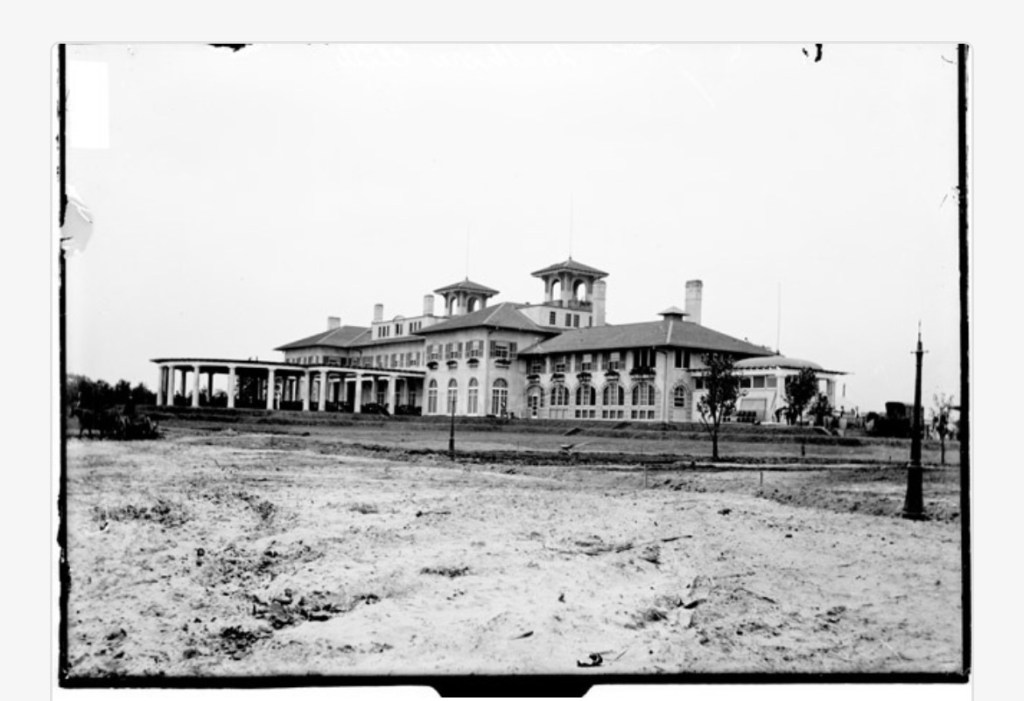
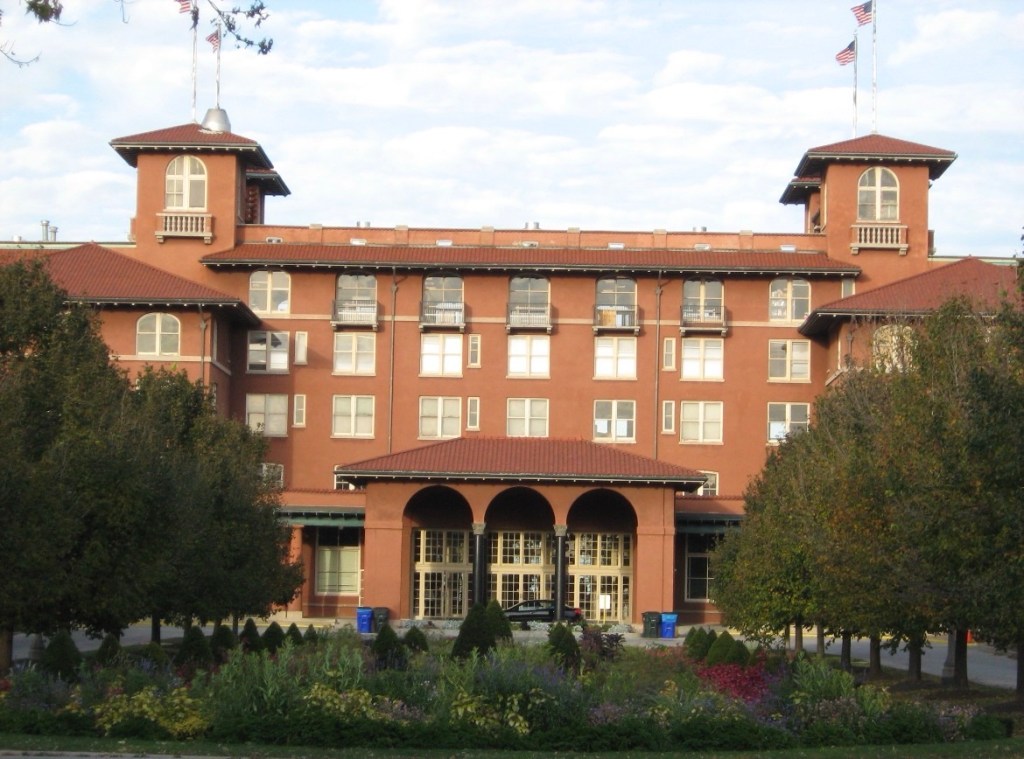
Before I knew anything about its history—before I understood architecture, class, or the way this city moves—I knew that place as something else entirely.
Me and my friends used to go there when we were teenagers to go swimming.
And baby… that place was filthy.
Not “a little run down.” Not “needs some work.”
No.
It was decrepit.
The bathrooms disgusting. Filled with muck and grime.
You could feel it.
Even as kids, we felt it.
We didn’t have the language for it back then, but looking back now?
We were walking through the aftermath of something that had already fallen.
When It Was Built: Wealth, Whiteness, and the Lake
Back in 1905, the South Shore Country Club was built as a playground for Chicago’s white elite. Designed in a grand Mediterranean Revival style, it had everything—private beach, golf course, ballroom, stables.
It wasn’t just a club.
It was a statement.
And like most statements in this country at that time, it came with a very clear message about who belonged—and who didn’t.
Black Chicagoans were excluded. Completely.
So while that building sat there shining on the lake, most of the people living in this city couldn’t even step foot inside it.
The Shift: When the Neighborhood Changed
By the 1960s, South Shore itself began to change.
Black families moved in—educated, working, building stable lives. And like clockwork, white residents began to leave.
By 1970, South Shore was majority Black.
Now here’s where the story takes a turn.
The club could have adapted. Could have opened its doors fully and embraced the community around it.
But instead?
It hesitated.
Delayed.
Held onto an identity that no longer matched the neighborhood it sat in.
And that hesitation cost it everything.
The Fall: The 1970s Collapse
By the early 1970s, the South Shore Country Club was collapsing under its own weight.
Membership dropped. Money dried up. The illusion of permanence cracked wide open.
In 1973, the club shut down.
Gone.
A place that once represented exclusivity and power… reduced to an empty shell.
And that’s the version me and my friends knew.
Not the glamour.
Not the prestige.
But the aftermath.
The 70s–80s: Neglect, Decay, and Uncertainty
By the time the Chicago Park District acquired the property in the mid-1970s, the damage had already been done.
And through the late 70s into the 80s?
That building sat in limbo.
Worn down.
Underfunded.
Nearly demolished.
It wasn’t being cared for the way something that grand should’ve been.
And when you walked through it—as a child, just exploring—you could feel that neglect.
It felt like a place that had been left behind.
Like something important had happened there once… but nobody was coming back for it.
The Fight to Save It
here’s where the story refuses to end in decay.
Because the people of South Shore didn’t let it.
Community members, activists, everyday folks—people who had never been allowed inside that building when it was at its peak—fought to save it.
Let that sit for a second.
The very people it once excluded became the ones who refused to let it be destroyed.
There were plans to tear it down.
Plans to replace it.
Plans to repurpose it into something else entirely.
And the community said:
No.
The Transformation: From Private Club to Public Treasure
Instead of demolition, the building was restored.
Slowly. Over time. Piece by piece.
And what was once the South Shore Country Club became the South Shore Cultural Center.
Now the doors are open.
Now the community fills the space.
Now the laughter, the music, the weddings, the everyday life—it all belongs to the people who were once shut out.
What It Means Now
Today, it stands as more than just a building.
It’s a symbol.
Of what happens when arrogance collapses.
Of what happens when a community refuses to let something beautiful die.
Of how history can be rewritten—not erased, but transformed.
Closing Reflection
I think about that little girl I used to be, walking through that dusty, decaying building with my friends.
We didn’t know we were stepping through history.
We didn’t know we were standing inside something that had once said, “Not for you.”
All we knew was that it felt abandoned.
Forgotten.
But it wasn’t.
Because in the end, that building didn’t belong to the people who built it.
It belongs to the people who saved it.
And that right there?
That’s Chicago.
 The Potty Mouth Granny
Leave a comment