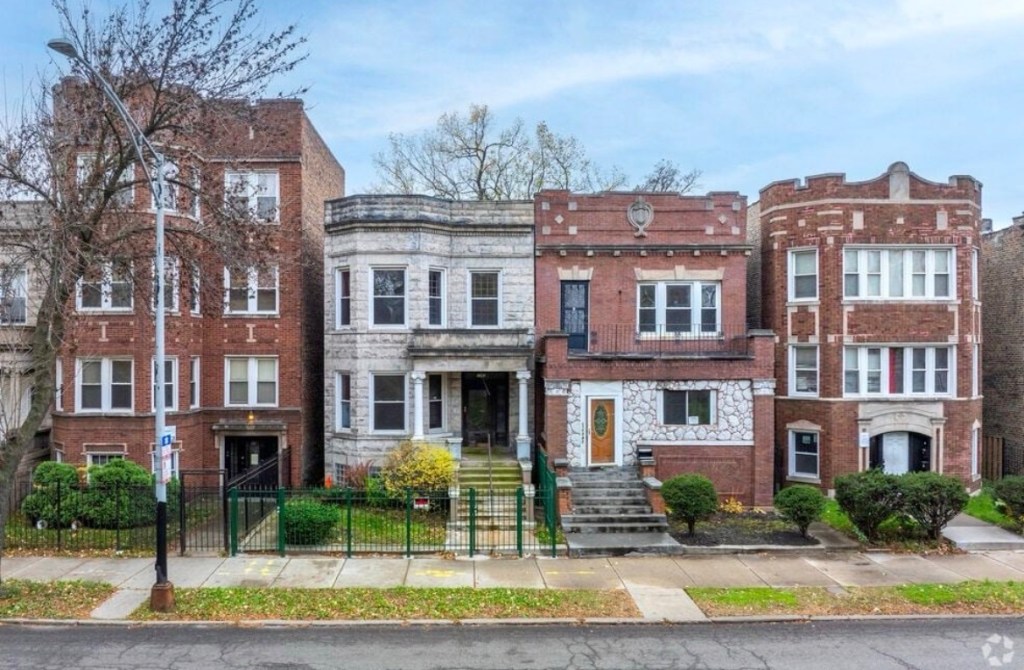
Early Days: From Prairie to Promise
Before it became Englewood, it was open land—prairie stretching under a wide Midwestern sky. In the mid-1800s, the area began to develop as railroads cut through it, turning it into a vital transportation hub. By the late 19th century, Englewood was annexed into Chicago (1889), and the neighborhood began to bloom.
What made Englewood pop was access. Streetcars and rail lines made it easy for people to get downtown, and folks—especially working- and middle-class white families—moved in, building solid homes and tight-knit communities. By the early 1900s, Englewood wasn’t just growing—it was thriving.
At the heart of it all was 63rd and Halsted. That intersection? Baby, it was everything. One of the busiest commercial districts in the entire country. Shopping, theaters, restaurants—it was a whole world right there on the South Side.
The Shift: Migration, Segregation, and Red Lines
Then came the Great Migration—one of the most powerful movements of people in American history. Black families, fleeing the violence and oppression of the South, arrived in Chicago in search of something better.
But Chicago wasn’t exactly rolling out the welcome mat.
Segregation—both legal and “unofficial”—kept Black residents boxed into certain areas. As more Black families moved into Englewood in the mid-20th century, white residents began to leave in large numbers. This wasn’t just casual moving—it was engineered. Real estate practices like redlining and blockbusting fueled fear and profit, turning neighborhoods over quickly and often destructively.
By the 1960s, Englewood had transformed into a predominantly Black neighborhood. But instead of receiving investment and support, it was systematically disinvested in.
Disinvestment and Decline: When a Community Is Left Behind
This is the part folks love to talk about—but rarely understand.
As industries left Chicago and jobs disappeared, Englewood got hit hard. Businesses closed. The once-bustling 63rd Street corridor began to empty out. Schools and infrastructure suffered from lack of funding. Housing deteriorated.
And let’s be clear—this didn’t happen because the people failed.
It happened because systems failed the people.
Redlining meant banks wouldn’t invest. The loss of manufacturing jobs meant fewer ways to build stable lives. City resources dried up. What you got was a neighborhood rich in culture and community—but starved of opportunity.
By the late 20th century, Englewood had become shorthand in the media for crime and poverty. But that’s always been an incomplete story—one that erases the humanity of the people who stayed, who loved, who raised families there anyway.
Resistance, Renewal, and Right Now
Because here’s what they don’t tell enough:
Englewood didn’t die. It adapted.
Community organizations, activists, and residents have been doing the work for decades—long before anyone started paying attention. Urban farming initiatives like Growing Home have turned vacant lots into sources of food and jobs. The opening of a Whole Foods Market in 2016 brought both opportunity and debate about what real investment looks like.
There are new schools, art projects, local businesses, and a deep, ongoing push for equity and ownership.
And through it all, Englewood remains what it has always been at its core: a neighborhood shaped by its people. Resilient. Complicated. Alive.
Englewood is not just a headline.
Not just a statistic.
Not just a “problem to be solved.”
It is a story—of migration and movement, of policy and neglect, of culture and survival. A place where history sits heavy on the shoulders, but doesn’t break the back.
And if you listen closely, you’ll hear it:
Not ruin.
Not despair.
But a neighborhood still speaking… still becoming.
 The Potty Mouth Granny
Leave a comment