Now, anybody who knows me knows that I have a fascination with European history, particularly the royal families and the scandalous shit that went on behind palace walls. And let me tell you something: those people were some of the most conniving, murderous, sexually reckless motherfuckers to ever walk the earth.
Forget reality television. European royal history has enough sex, betrayal, murder, illegitimate children, and political intrigue to keep a person entertained for several lifetimes.
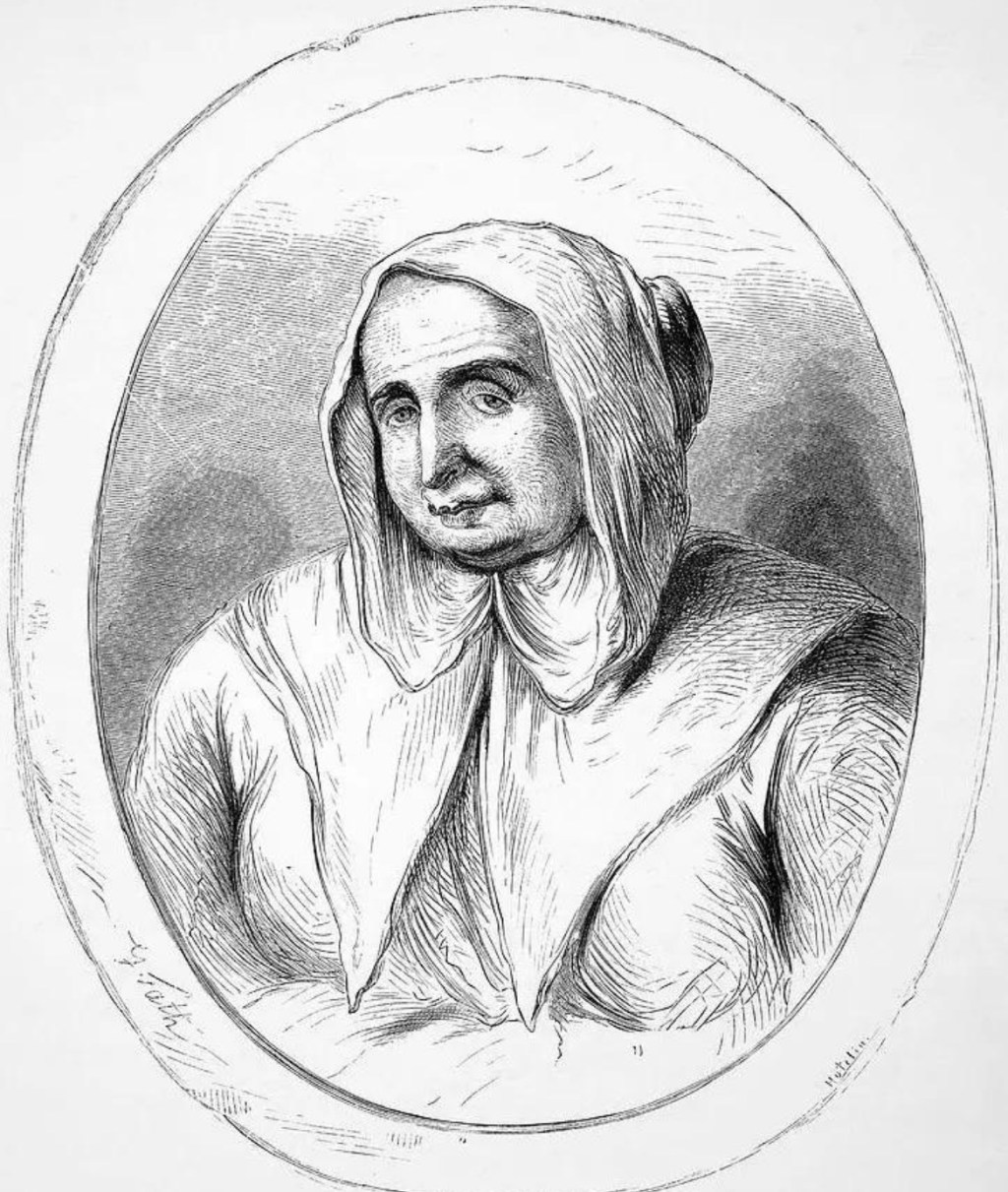
And then there was Catherine Deshayes Monvoisin, better known as La Voisin.
Baby, this woman was something else.
Born around 1640 in France, La Voisin was a fortune teller, alleged witch, businesswoman, and convicted poisoner who became one of the central figures in one of the most notorious scandals of seventeenth-century France.
The scandal became known as L’Affaire des Poisons, or the Affair of the Poisons.
And when I tell you this mess reached all the way to the bedroom of King Louis XIV, the legendary Sun King, I am not exaggerating.
A Woman Who Understood Human Nature
One thing I find fascinating about La Voisin is that she understood something about human beings that remains true nearly four hundred years later.
People will do some desperate shit for love, money, power, and revenge.
And if you can convince them that you possess the ability to deliver any of those things, somebody is going to pay you.
La Voisin initially made her living telling fortunes. But apparently, predicting someone’s future wasn’t nearly as profitable as helping them manipulate it.
Her business expanded to include love potions, magical rituals, poisons, and services associated with ending unwanted pregnancies.
And her clientele?
Honey, we aren’t talking exclusively about impoverished, desperate women wandering through the streets of Paris.
We are talking about wealthy aristocrats and people connected to the royal court.
Women who wanted their husbands dead. Women who wanted lovers to return. People who wanted inheritances. People who wanted rivals eliminated.
Allegedly, of course, because the historical record contains a mixture of documented crimes, accusations, coerced confessions, and some spectacularly outrageous stories.
But the demand was clearly there.
And La Voisin was prepared to supply it.
Now, before anybody starts hollering about women being naturally evil, let’s remember the period we’re discussing.
Seventeenth-century France was a deeply patriarchal society. A woman’s financial security, social standing, and sometimes her very survival could depend upon marriage and male favor.
That doesn’t excuse murder.
But it certainly helps explain why some women might become desperate enough to seek unconventional, illegal, or downright sinister solutions to their problems.
And La Voisin saw an opportunity.
The Business of Poison
Now, this is where the story gets particularly nasty.
La Voisin became associated with what was sometimes called inheritance powder, a rather delicate expression for substances intended to send somebody to the grave.
Imagine being so eager to inherit your husband’s estate that instead of waiting for the old bastard to die naturally, you decide to give him a little chemical assistance.
Good Lord.
But poisoning had certain advantages for people with murderous intentions.
Medical knowledge was limited, forensic toxicology was practically nonexistent by modern standards, and deaths that appeared natural could conceal foul play.
Some poisonous substances could produce symptoms resembling ordinary illnesses.
A convenient arrangement for somebody who wanted a person dead without having to explain why there was a knife sticking out of their chest.
La Voisin became part of a network involving fortune tellers, alleged sorcerers, poison suppliers, and other figures operating in the shadows of Parisian society.
And the entire enterprise might have continued for years had the authorities not begun investigating a series of suspected poisonings.
Eventually, those investigations led straight to her.
The King’s Mistress and the Alleged Black Masses
Now here comes the part that makes this story especially delicious from a historical standpoint.
Enter Madame de Montespan.
Françoise-Athénaïs de Rochechouart, the Marquise de Montespan, was one of the most famous mistresses of Louis XIV.
She was beautiful, ambitious, influential, and the mother of seven children by the king.
But being the king’s mistress wasn’t exactly a secure position.
Royal mistresses enjoyed extraordinary privileges, but their power depended heavily upon keeping a powerful man’s attention.
And we all know how some men behave when a new woman catches their eye.
According to accusations that emerged during the investigation, Madame de Montespan had sought La Voisin’s services to maintain the king’s affection.
And these weren’t merely allegations about somebody getting their palm read.
Oh, no.
The accusations included love potions, occult ceremonies, and participation in so-called black masses involving the priest Étienne Guibourg.
Some testimony even described the alleged ritual sacrifice of infants.
Now, I need to make something perfectly clear.
Many of these sensational accusations were never conclusively proven.
The investigation relied heavily on testimony obtained in a judicial system where torture was permitted, and historians have questioned the reliability of some of its most horrifying claims.
Madame de Montespan was never publicly tried for these alleged offenses.
Personally, I think the confirmed history is disturbing enough without pretending every gruesome allegation was established fact.
But imagine the scandal.
The king’s own mistress being linked to a woman accused of supplying poison and conducting satanic rituals.
The Sun King’s magnificent court, with its elaborate etiquette, powdered wigs, luxurious clothing, and endless obsession with appearances, potentially concealing some truly diabolical behavior.
And people have the nerve to act as though modern society invented moral corruption.
Please.
When the Investigation Got Too Close to the Throne
La Voisin was arrested on March 12, 1679.
The investigation became so extensive that Louis XIV established a special tribunal called the Chambre Ardente, or Burning Chamber.
The authorities uncovered allegations involving poison, murder, sorcery, abortion, and criminal activity connected to prominent members of French society.
And here’s something I find particularly interesting.
As the investigation moved closer to the royal court, the king became increasingly concerned about the implications.
Eventually, he restricted the investigation into matters involving Madame de Montespan.
Well, imagine that.
When the accusations involved ordinary people, the machinery of justice moved forward.
But when the scandal threatened the reputation of the monarchy, suddenly discretion became extremely important.
Ain’t that some shit?
Of course, royal authorities had legitimate reasons to investigate suspected murder. But the handling of this affair also illustrates how differently justice could operate depending upon a person’s social position.
Money and proximity to power could make all the difference.
Some things never change.
The Death of La Voisin
On February 22, 1680, La Voisin was burned alive in Paris.
Let that sink in.
Burned. Alive.
Whatever crimes she committed, the manner of her execution reminds us just how brutal European justice could be.
And her death did not end the scandal.
After her execution, her daughter provided additional accusations concerning Madame de Montespan.
The revelations threatened to cause even greater embarrassment to the monarchy.
In 1682, Louis XIV brought the special tribunal’s proceedings to an end.
Years later, in 1709, the king destroyed documents containing accusations related to the affair.
Think about that.
Historical evidence destroyed by royal authority.
Which means that even today, centuries later, certain questions surrounding the Affair of the Poisons remain unanswered.
Was La Voisin a Monster or an Opportunist?
This is the question that interests me most.
La Voisin was clearly no innocent little flower unfairly accused simply because she was an independent woman.
There is substantial historical evidence connecting her to a criminal network that supplied poisons.
But I also believe that examining a woman like La Voisin requires more than reducing her to a cartoon witch stirring a bubbling cauldron.
She was a woman operating in a society where women possessed far fewer legitimate avenues to wealth, influence, and independence than men.
She found an illicit market, cultivated influential customers, and built an enterprise around the desperation, greed, and ambition of others.
That makes her a fascinating historical figure.
It does not make her a feminist heroine.
And I think that’s an important distinction.
I don’t believe every powerful or independent woman deserves admiration simply because she managed to exercise power in a patriarchal society.
Some women are brilliant.
Some women are courageous.
And some women are dangerous as fuck.
Sometimes those qualities coexist.
La Voisin appears to have been intelligent, resourceful, commercially astute, and willing to participate in activities that could destroy human lives.
What fascinates me is not the suggestion that she was secretly admirable.
It’s the realization that she understood the hypocrisy of the society in which she lived.
The same aristocrats who publicly celebrated Christianity, morality, family honor, and social respectability could privately seek poison, forbidden rituals, and assistance with eliminating inconvenient people.
Their public virtue did not always survive a journey behind closed doors.
And La Voisin profited from that contradiction.
Until the entire enterprise collapsed around her.
My Final Thoughts
I have always believed that history is one of the greatest tools for understanding human behavior.
The clothing changes. The architecture changes. The political systems evolve.
But greed, jealousy, lust, ambition, desperation, and the hunger for power?
Those motherfuckers have been around since the beginning of civilization.
La Voisin’s story is fascinating because it reveals the darker underside of an age usually remembered for its magnificent palaces, extravagant fashions, and powerful monarchs.
Beneath the glitter of Versailles existed a world of insecurity, competition, superstition, and fear.
People wanted love they couldn’t secure.
Money they didn’t possess.
Power they couldn’t legitimately obtain.
And sometimes they were willing to kill to get it.
La Voisin gave some of those people exactly what they wanted, or at least promised that she could.
And eventually, she paid for it with her life.
But what strikes me most is that while La Voisin went to the stake, the most powerful figures connected to the scandal were largely protected from its worst consequences.
The woman who supplied the darkness was destroyed.
The people who may have purchased it could retreat behind their titles, fortunes, and royal connections.
And that, my friends, is why I love studying history.
Because the more you learn about the past, the harder it becomes to pretend that human beings have fundamentally changed.
Four hundred years later, the names are different, the methods have changed, and the palaces have become mansions.
But the bullshit?
The bullshit remains remarkably consistent.
— The Potty Mouth Granny


Leave a Reply