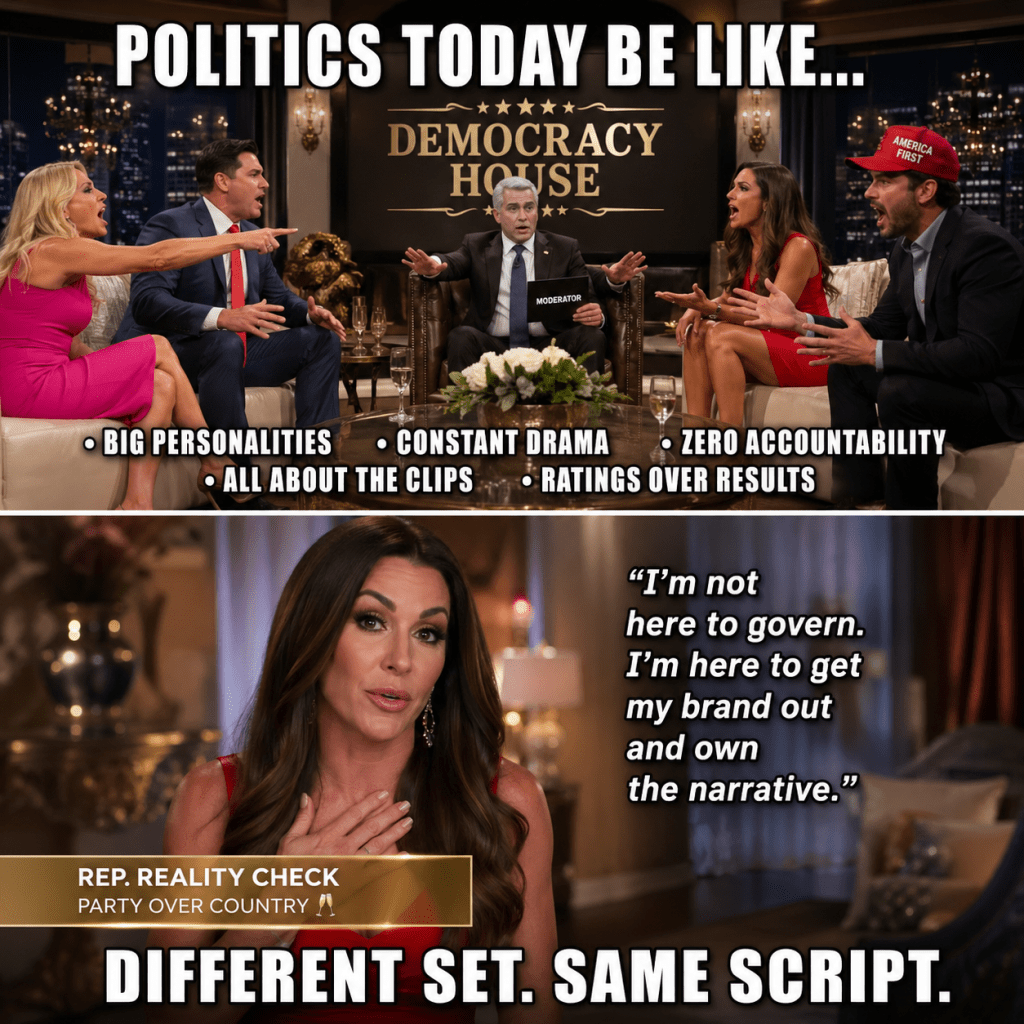
Living in a reality-television world is a relatively new phenomenon in American society. Spectacle itself isn’t new—human beings have always gathered around drama, gossip, and public conflict—but modern media turned that ancient habit into a permanent stage.
Reality television blurred the line between private life and public performance. Ordinary people became characters, their arguments, romances, betrayals, and humiliations packaged into entertainment. What once would have been whispered gossip between neighbors is now filmed, edited, and broadcast to millions.
Over time the logic of reality TV leaked out of the television set and into everyday life. Social media turned ordinary people into producers of their own personal shows. Everyone curates a storyline now—posting highlights, staging moments, performing outrage, and chasing attention the way contestants chase screen time.
Politics eventually wandered onto that same stage.
The rise of Donald Trump is one of the clearest examples of how entertainment culture and political culture began to merge. Before entering politics, Trump spent years as the host of the reality show The Apprentice, where he played the role of the decisive billionaire judge delivering his famous line: “You’re fired.”
When he later ran for president, the political arena already resembled the environment reality television had trained audiences to expect—drama, conflict, larger-than-life personalities, and constant media attention. Campaign rallies often felt less like traditional political speeches and more like episodes in an ongoing series, with heroes, villains, and cliffhangers designed to keep viewers emotionally invested.
Whether one admires him or strongly hates him, Trump’s rise demonstrated something deeper about modern culture: politics had become entertainment, and entertainment had become politics. The two arenas were no longer separate stages.
In a reality-television culture, visibility often substitutes for credibility, and spectacle can overpower substance. The loudest character in the room can dominate the narrative simply by commanding attention.
Real life, however, is rarely that simple. It doesn’t resolve itself neatly in episodes or seasons. Human societies are complicated ecosystems of history, economics, culture, and human behavior—things that don’t fit easily into dramatic story arcs or viral clips.
Yet the temptation remains: to treat life like a show, politics like a storyline, and public figures like characters in an endless national drama. And once a society gets used to watching itself this way, the cameras never really turn off.
 The Potty Mouth Granny
Leave a comment