When people talk about Chicago’s historic Black neighborhoods, places like Bronzeville and Hyde Park often dominate the conversation. Yet on the city’s South Side lies a community that has long represented stability, homeownership, education, and Black middle-class achievement: Chatham.
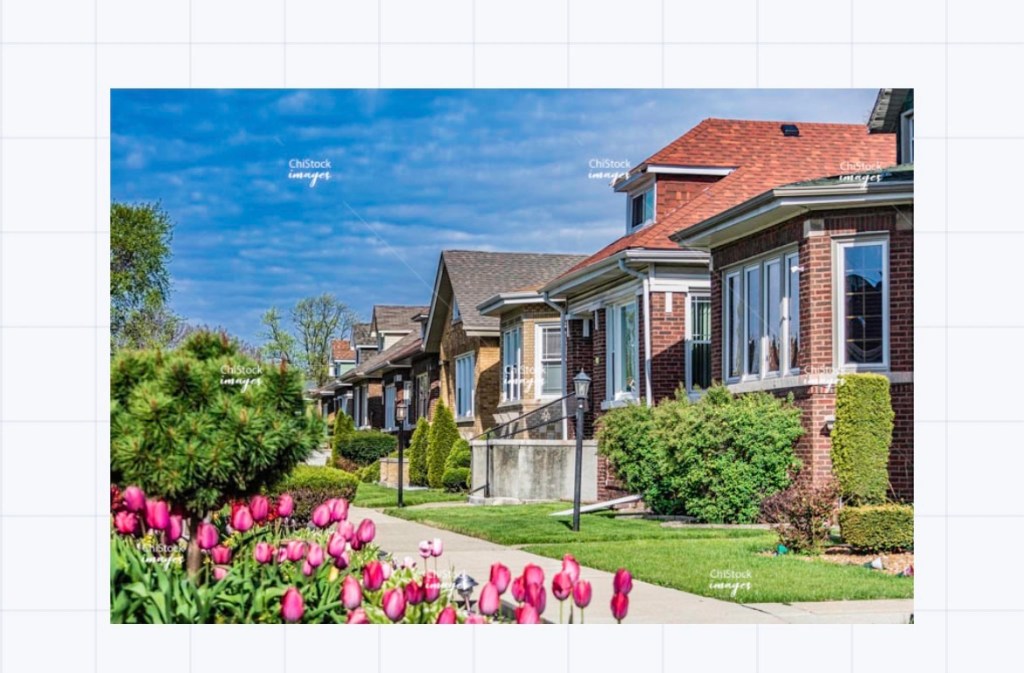
Bounded roughly by 79th Street to the north, 87th Street to the south, Cottage Grove Avenue to the east, and the Dan Ryan Expressway area to the west, Chatham has been one of Chicago’s most respected residential neighborhoods for generations. Its tree-lined streets, brick bungalows, and well-maintained homes tell the story of families who invested not only in property but also in community.
A Neighborhood in Transition
Like many Chicago neighborhoods, Chatham was not always predominantly Black. During the first half of the twentieth century, the area was largely inhabited by European immigrant and white ethnic families. As the Great Migration brought Black Southerners to Chicago seeking opportunity and freedom from Jim Crow segregation, housing patterns throughout the city began to change.
By the 1950s and 1960s, Black families increasingly moved into Chatham, attracted by its solid housing stock, strong schools, and reputation as an upwardly mobile community. As white residents moved to the suburbs, Chatham became one of the city’s premier Black middle-class neighborhoods.
For many Black Chicagoans, moving to Chatham was more than a change of address—it was a sign that years of hard work had paid off. Families who had lived in overcrowded apartments or older neighborhoods often saw Chatham as a place where they could put down roots and build a future.
The Neighborhood of Bungalows
One of Chatham’s most recognizable features is its beautiful collection of brick bungalows and single-family homes. Block after block showcases the craftsmanship of early twentieth-century builders.
The neighborhood became known for immaculate lawns, flower gardens, and homeowners who took pride in maintaining their properties. Chatham’s streets reflected a strong belief that homeownership was a pathway to stability and generational wealth.
Even today, many longtime residents speak proudly about the neighborhood’s appearance and the sense of responsibility that comes with caring for one’s home and community.
A Center of Black Economic Power
Chatham has long been a center of Black commerce and entrepreneurship. Its shopping districts and business corridors attracted customers from across Chicago’s South Side.
One of the neighborhood’s most important landmarks is the historic Chatham Village Shopping Center, which became a symbol of Black consumer power and economic growth. Local businesses, professional offices, restaurants, and community institutions helped make Chatham a destination for residents throughout the city.
The neighborhood’s economic strength demonstrated what Black communities could achieve despite decades of discrimination in housing, lending, and employment.
Civic Pride and Community Leadership
Perhaps no characteristic defines Chatham more than its strong sense of civic pride. Residents have long been known for their involvement in block clubs, neighborhood associations, churches, and local organizations.
Churches have served as anchors of the community, providing spiritual guidance, social services, and leadership. Schools, community groups, and neighborhood organizations have worked together to preserve the area’s reputation as a safe and welcoming place to live.
This commitment to community involvement helped Chatham become a model of neighborhood stability for decades.
Challenges and Resilience
Like many urban communities, Chatham has faced challenges, including population decline, economic shifts, and the broader effects of disinvestment on Chicago’s South Side.
Yet the neighborhood continues to demonstrate resilience. Residents remain committed to preserving their homes, supporting local businesses, and advocating for investment and development.
The story of Chatham is not simply one of challenges. It is a story of perseverance, pride, and determination.
A Legacy of Achievement
For generations of Black Chicagoans, Chatham represented a dream realized—a neighborhood where families could own homes, educate their children, build businesses, and participate fully in community life.
Its history reflects the larger story of Black Chicago: migration, struggle, achievement, and resilience.
Today, Chatham remains one of the South Side’s most significant neighborhoods, a place where the legacy of hard work and community pride can still be seen on every block. It stands as a testament to the generations of residents who believed that building strong families and strong neighborhoods could help build a stronger city.


Leave a comment