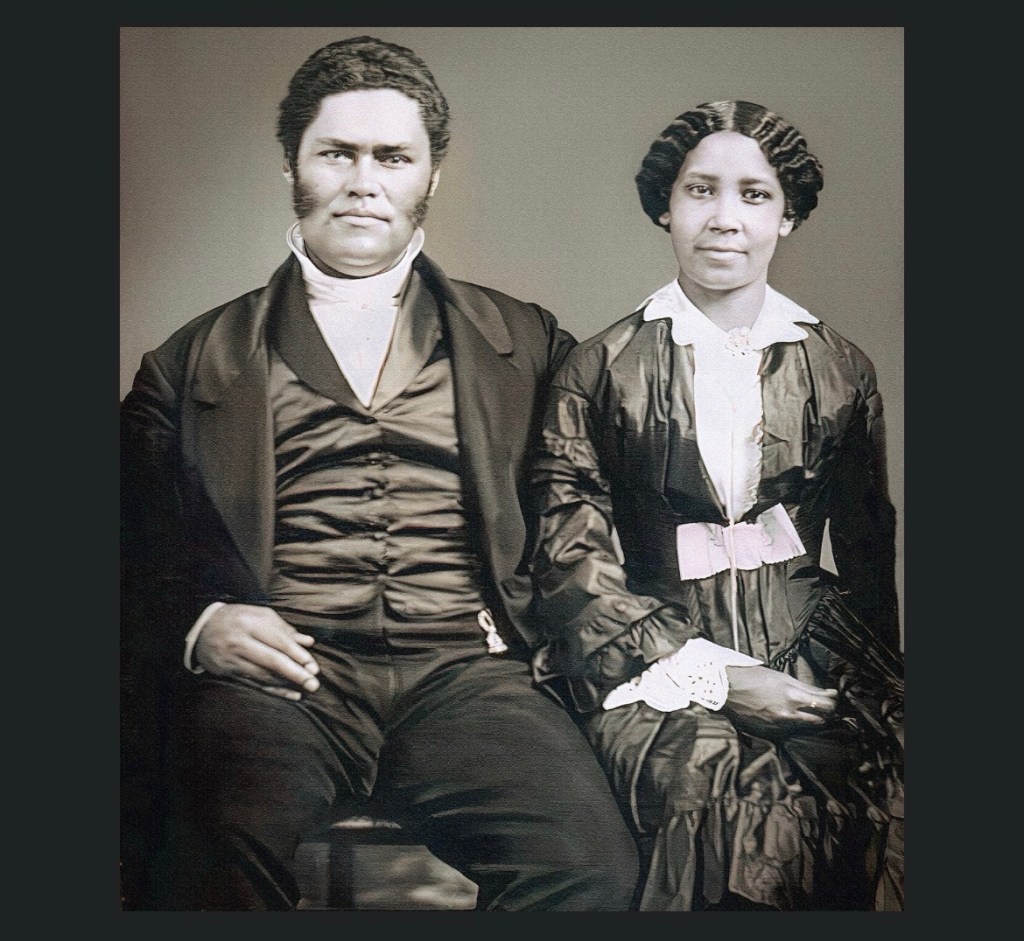
Long before Chicago became known for towering skyscrapers and bustling streets, there was a woman quietly building something far more enduring—a legacy.
Her name was Mary Jane Richardson Jones.
If you’ve never heard of her, you’re not alone. History has a habit of overlooking Black women, even the ones who helped shape cities. But without Mary Jane Richardson Jones, the story of Chicago would be incomplete.
Born free in Memphis, Tennessee, around 1819, Mary Jane Richardson entered a nation where freedom for Black people was fragile. Even those born free lived under constant suspicion. She experienced that reality firsthand when she and her husband, John Jones, traveled to Chicago in the 1840s and were detained because authorities assumed they were escaped slaves. Imagine that—your freedom questioned simply because of the color of your skin. (National Park Service)
The couple arrived in Chicago with almost nothing.
What they built from those humble beginnings was extraordinary.
John Jones became one of Chicago’s wealthiest Black businessmen through his tailoring business, but Mary Jane was never merely “the wife of.” Together, they transformed their home into one of the city’s most important stops on the Underground Railroad. Hundreds of enslaved men, women, and children seeking freedom found refuge under their roof. While bounty hunters searched the streets, Mary Jane helped people board trains to freedom, knowing that discovery could cost her everything. (National Park Service)
Her courage wasn’t loud.
It was steady.
It was relentless.
The Jones home became a gathering place for abolitionists, civil rights leaders, and freedom fighters. Frederick Douglass visited. John Brown stayed there before his raid on Harpers Ferry. These weren’t distant historical figures to Mary Jane—they were fellow travelers in the fight for justice. (Wikipedia)
After the Civil War, many people would have considered their work finished. Mary Jane did not.
Following her husband’s death, she became one of the wealthiest and most respected Black women in Chicago. She used that influence not to isolate herself, but to lift others. She supported the education of young Dr. Daniel Hale Williams, who would go on to perform one of the world’s first successful open-heart surgeries. She donated to Provident Hospital, the nation’s first Black-owned and operated hospital. (Wikipedia)
She also embraced another fight—the fight for women’s suffrage.
Though initially cautious, Mary Jane eventually opened her home to leaders like Susan B. Anthony and Carrie Chapman Catt. More importantly, she mentored a new generation of Black women activists, including Ida B. Wells and Fannie Barrier Williams, helping ensure that Black women’s voices were not left behind in either the civil rights movement or the women’s movement. (Wikipedia)
By the late nineteenth century, people referred to Mary Jane Richardson Jones as the matriarch of Black Chicago.
That title wasn’t earned through wealth alone.
It was earned through service.
Through generosity.
Through unwavering belief that freedom meant more than escaping chains—it meant education, opportunity, dignity, and political power.
Today, we drive through Chicago streets, walk through neighborhoods, and celebrate the city’s history without realizing that one remarkable Black woman helped lay its moral foundation.
Mary Jane Richardson Jones reminds us that history isn’t built only by presidents and generals. Sometimes it’s built by a woman who opens her front door.
Sometimes it’s built by someone who refuses to look away when others need help.
Sometimes it’s built by a grandmother of a community who quietly changes the course of a city.
Chicago has had many queens.
Mary Jane Richardson Jones was one of the very first.


Leave a Reply