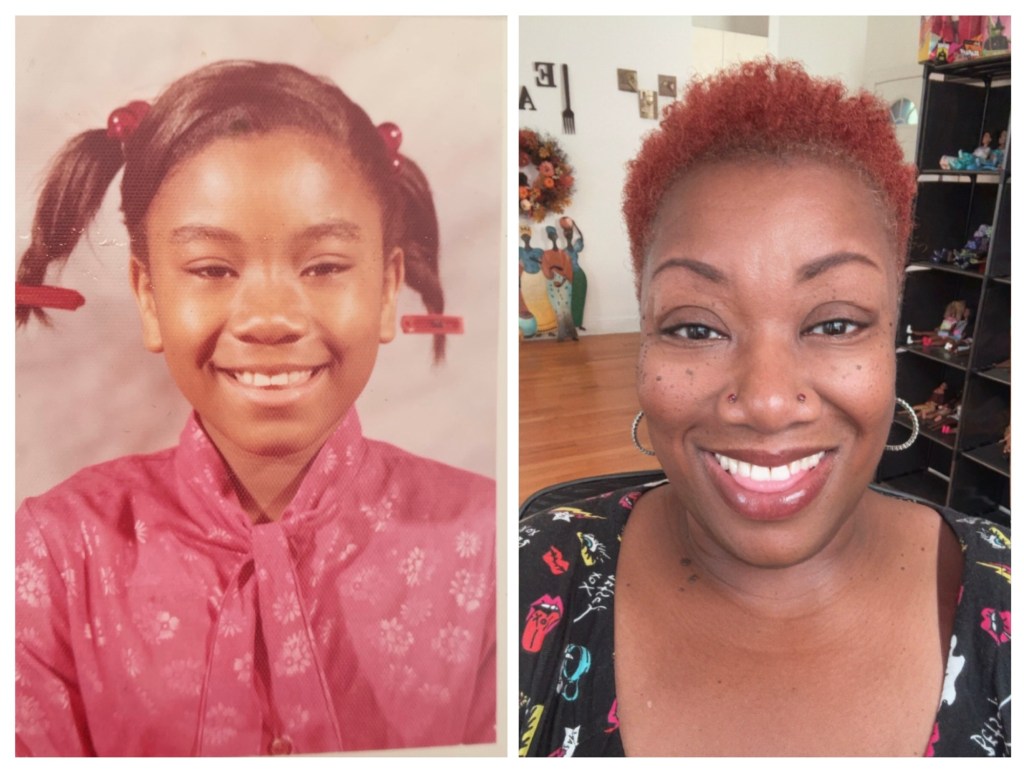
The autobiographical memoir “Tales of a Little Ghetto Girl” by Kathy Henry, published in the urban policy and cultural journal Urban Reinventors, presents a poignant autoethnographic examination of working-class Black female life in late-twentieth-century Chicago. Grounded in the discipline of urban sociology, Henry’s narrative functions as both a personal coming-of-age chronicle and a rigorous lived-experience document detailing systemic marginalization, matriarchal survival strategies, substance dependency, mental health trauma, and non-traditional educational achievement. By contextualizing her trajectory from a childhood in Chicago’s South Side to adult graduate studies, Henry illuminates the complex intersections of race, gender, class, and urban geography. [1][2]
Structural Overview and Narrative Context
Henry’s narrative is structured chronologically, spanning her birth in 1970 through the late 2000s, reflecting broader socio-economic shifts within Black urban communities. The text details her upbringing as the youngest of three children raised by a single mother in low-income housing, navigating the social complexities of Chicago’s residential segregation. Rather than framing her upbringing through a deficit-oriented lens, Henry establishes a dual narrative framework: one that acknowledges the harsh realities of poverty, the 1980s crack epidemic, and domestic instability, while simultaneously highlighting the cultural wealth, structural reliance, and protective mechanisms inherent in extended Black matriarchal networks.
Life Stage / Year
Primary Event or Milestone
Underlying Structural or Sociological Dynamics
Narrative Outcome
1970
Birth of Kathy Henry in Chicago, IL.
Expansion of single-mother households amid post-industrial urban shifts.
Raised in a female-headed household supported by wage labor.
1963–1970s
Family co-habitation at 7246 South University Ave.
Communal housing strategies and Southern Black migration networks.
Multi-generational kinship care and emotional stabilization.
1978
Death of niece Latamara; escalation of brother Larry’s alcoholism.
Domestic trauma, infant mortality under suspicious circumstances, lack of institutional intervention.
Intrafamilial distress and lifelong substance dependency for Larry.
1984–1987
Early physical maturity, street harassment, adolescent pregnancy.
Gendered urban space exposure; systemic gaps in sex education.
Birth of daughter Noelle Dominique Henry (April 24, 1987); high school dropout.
1994
Death of brother Randy at age 34.
The 1980s/1990s crack cocaine epidemic; intersectional marginalization of Black queer men.
Fatal drug overdose following years of addiction and social isolation.
1997–2006
Attainment of GED at age 27; BA in Sociology at age 35.
Non-traditional adult education pathways; post-secondary persistence.
Graduation from Roosevelt University (May 11, 2006); enrollment in MA in Journalism.
The narrative trajectory illustrates how institutional voids in public health, municipal support, and formal education are routinely counterbalanced by informal community networks. Henry’s voice maintains an analytical distance informed by her sociology background, allowing her to frame personal memory as institutional critique.
Matriarchal Kinship Networks and Communal Housing Dynamics
A central anchor of Henry’s chronicle is the multi-generational living arrangement established within a brick two-flat building located at 7246 South University Avenue, purchased by her Aunt Maggie in 1963. This residential structure functioned as an economic and social buffer against urban poverty, distributing caregiving responsibilities across an extended network of female relatives. The basement was occupied by Henry’s mother and her three children; the first floor housed Aunt Maggie and her daughters Cleo and Kim; while the second floor accommodated the family grandmother, additional aunts, and extended partners.
This spatial arrangement reflects historical survival strategies developed by Black families migrating from the agrarian South—specifically exemplified by Henry’s mother, who was the daughter of sharecroppers from Itta Bena, Mississippi—to Northern industrial cities. The shared domestic space enabled emotional nurturance, collective child-rearing, and resource pooling that mitigated the deficiencies of low-wage employment.
The fragile nature of informal safety nets is illustrated when Aunt Maggie developed severe schizophrenia following a 1970 trip to Jerusalem. In the absence of accessible community mental health care, Maggie’s unmanaged psychiatric distress led to domestic instability and the eventual dissolution of the shared housing arrangement. Aunts and grandmothers dispersed to alternative residences, including Kansas, which altered the protective ecosystem surrounding Henry during her late childhood. Despite this spatial fragmentation, individual maternal figures—such as Cousin Cleo, who provided continuous material and emotional assistance during Henry’s adolescent motherhood—maintained secondary safety nets that sustained the nuclear family.
Intersectionality, Systemic Trauma, and Urban Vulnerabilities
Henry’s text offers an unvarnished examination of how systemic urban crises manifest within the private sphere of the family, particularly through the intersecting vulnerabilities of gender, sexual identity, and substance addiction.
Family Member
Identity & Social Context
Primary Structural Stressors
Henry’s educational recovery was facilitated by peer encouragement, notably from her cousin Lisa, who pressed her to obtain a General Educational Development (GED) credential at age twenty-seven. This credential served as a bridge to higher education, culminating in Henry earning a Bachelor of Arts degree in Sociology from Roosevelt University in 2006 at age thirty-five, followed by enrollment in a Master of Arts program in Journalism. This educational trajectory broke intergenerational cycles of disadvantage, as evidenced by her daughter Noelle graduating high school in 2005 with a 4.0 grade point average and induction into the National Honor Society.
Longitudinal Life Course Impact
Mother
Southern migrant background; single wage-earner.
Low-wage labor; solo parenting without paternal financial contribution.
Sustained primary household stability until her death on Dec 6, 2006.
Randy (Brother)
Born 1960; Black homosexual male in 1970s–80s Chicago.
Homophobia; intersectional isolation; structural exposure to illicit drug markets.
Escalated from marijuana to crack cocaine; died of overdose in 1994 at age 34.
Larry (Brother)
Born 1956; working-class male.
Loss of child (Latamara) in 1978; domestic abuse trauma; employment termination.
Chronic functional alcoholism; liver cirrhosis; institutional cycle of rehabilitation.
Kathy Henry
Born 1970; intellectually gifted; early physical development.
Premature sexualization; street harassment; adolescent pregnancy at 15.
Educational disruption; financial hardship; eventual adult academic achievement.
The profile of her brother Randy exposes the severe social isolation experienced by Black gay men during the 1970s and 1980s. Facing dual marginalization from both broader society and localized cultural heteronormativity, Randy turned to substance use as a coping mechanism. His progression from marijuana to powder cocaine and ultimately crack cocaine tracks the broader public health crisis that devastated urban centers during that era. Henry emphasizes Randy’s deep capacity for affection and creativity—noting his role as a protective figure who styled her hair and bought her cherished toys—thereby humanizing a demographic frequently stigmatized in public discourse.
Concurrently, her eldest brother Larry’s chronic alcoholism is contextualized as a coping response to unaddressed trauma stemming from the 1978 death of his two-year-old daughter, Latamara, under suspicious circumstances involving severe scalding. The lack of forensic or legal accountability at the time left deep psychological wounds that manifested in lifelong addiction, job instability, and medical morbidity, including advanced liver cirrhosis.
Henry also records her own vulnerability as a young girl navigating public spaces. Reaching physical maturity at age nine made her the target of adult street harassment, leering, and predatory financial propositions. This hyper-sexualization occurred before she possessed the psychological maturity to comprehend it, creating a disjunction between her inner self—an introverted child who sewed doll clothes and read classical literature—and her external presentation in the neighborhood.
Educational Trajectories, Social Mobility, and Agency
A prominent theme within the memoir is the tension between intellectual ambition and neighborhood peer pressures. Henry describes herself as an avid reader who engaged with literature such as Little Women and Greek mythology, translating these texts into creative play. However, within the social dynamics of her peer group, academic orientation was often stigmatized as out of touch with neighborhood norms.
To assimilate during early adolescence, Henry adapted her behavior, which contributed to an unexpected academic decline upon entering high school. This shift, combined with a lack of comprehensive reproductive health education, led to her pregnancy at age fifteen. Henry stresses that her pregnancy resulted not from peer pressure toward sexual activity, but from natural curiosity unassisted by accurate information regarding contraception.
The birth of her daughter, Noelle Dominique Henry, on April 24, 1987—following an emergency C-section due to fetal distress—marked a major turning point. Although adolescent motherhood initially resulted in dropping out of high school and prolonged financial hardship, it simultaneously ignited a long-term commitment to personal and familial mobility. Henry’s mother provided non-judgmental child-rearing support, allowing Henry to maintain long-term aspirations.
Religion, Spirituality, and Institutional Critique
Henry’s text offers a nuanced critique of institutional religion within the Black community. Raised in an environment heavily influenced by Southern Baptist traditions, Henry observes a contradiction between dogmatic religious rhetoric and genuine spiritual practice. Her mother avoided formal church attendance due to the abrasive “hell-fire” theology encountered during her youth, yet maintained a private, rigorous engagement with Biblical texts.
Following her mother’s model, Henry rejects organized dogmatism and moral grandstanding, favoring an individualized, inquisitive faith. She critiques religious hypocrisy—specifically instances where doctrine is weaponized against marginalized individuals, such as her late brother Randy or unwed mothers—while upholding a baseline ethical framework centered on personal accountability, empathy, and resilience.
Synthesis and Analytical Conclusions
Kathy Henry’s “Tales of a Little Ghetto Girl” stands as a significant autoethnographic contribution to urban sociology and Black feminist literature. Through a candid narrative style, Henry demonstrates how structural forces—such as deindustrialization, racialized poverty, residential segregation, and public health failures—are mediated through the micro-level dynamics of family life.
The text’s primary contribution lies in its conceptualization of urban Black womanhood. Henry rejects both pathologizing narratives that reduce inner-city lives to mere victimhood and idealizing narratives that ignore real structural trauma. Instead, she presents a complex portrait of resilience: a narrative where severe setbacks—such as teenage pregnancy, high school attrition, family loss, and job displacement—are met with adaptive survival strategies rooted in female solidarity, intergenerational mentorship, and non-traditional educational re-entry. Ultimately, the essay affirms that while structural inequality imposes profound constraints, individual agency combined with persistent communal support provides a viable pathway toward personal transformation and social mobility.
1. https://andylamas.files.wordpress.com/2013/06/social-justice-research-academy-syllabus-official-versionj-2013-rev-08-19-2013.pdf (FREEDOM DREAMS SOCIAL JUSTICE RESEARCH ACADEMY SYLLABUS – Andy Lamas)
2. https://lists.cc.ysu.edu/pipermail/urbanth-l/2009-December/002761.html ([URBANTH-L] “The Right to the City – The Entitled and the Excluded)


Leave a Reply