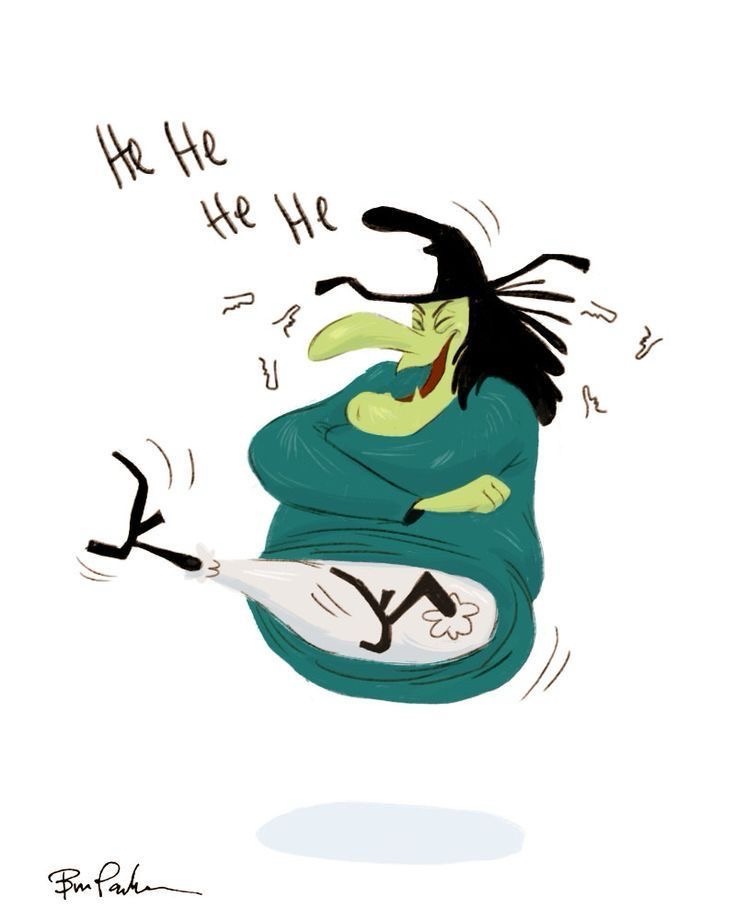
I have always loved a woman who refuses to behave herself. So let’s talk about one of my favorite ladies. Witch Hazel of Looney Tunes.
Long before television started giving us complicated female villains, witches with trauma, misunderstood antiheroines, and women who “lean into their power,” there was this wild-haired, green-skinned, cackling old broad tearing through Looney Tunes like she owned the place.
And honestly?
She kind of did.
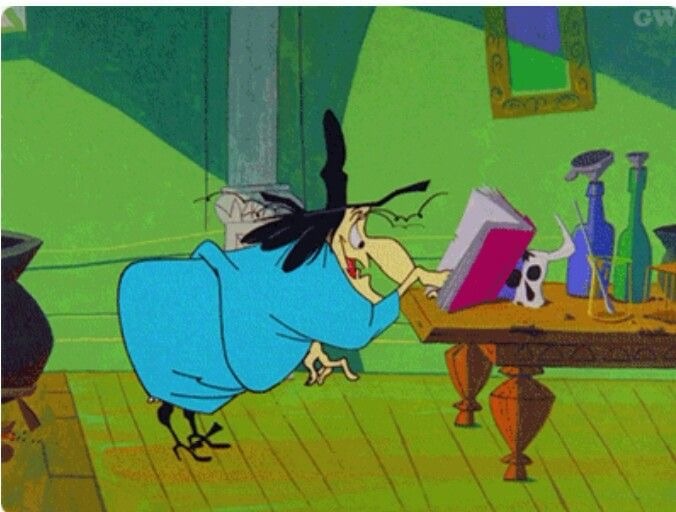
Witch Hazel was ugly by design. Not “Hollywood ugly,” where they put glasses on a beautiful woman and expect us to play along. I mean gloriously, unapologetically grotesque. Big nose. Missing tooth. Wild black hair. Green skin. Witch clothes. That mad cackle.
And she loved herself anyway.
That is what makes her so damn funny to me.
Witch Hazel debuted in the 1950s, during an era when women on television and in movies were generally expected to be pretty, pleasant, young, marriageable, and feminine in very specific ways. Beauty was currency. Youth was power. A woman’s desirability was often treated like the most important thing about her.
Then here comes Hazel.
Running around with a broomstick.
Laughing like a lunatic.
Trying to cook Bugs Bunny.
Not a girdle in sight.
I respect it.
Of course, the joke was often that Witch Hazel was hideous. That was part of the cartoon language of the time. Old women, especially old unmarried women, were frequently portrayed as witches, hags, battle-axes, nags, or lonely old spinsters.
Society has always been a little nervous about women who survive long enough to stop caring what everybody thinks.
An older woman without a husband?
Suspicious.
An older woman with opinions?
Terrifying.
An older woman with power?
Well, hell. She must be a witch.
That is probably why I look at Witch Hazel differently now than I did when I was a child.
As a kid, she was funny.
As an older woman, I see the joke underneath the joke.
Witch Hazel was free.
She was not somebody’s wife. She was not somebody’s mother. She was not standing in a kitchen waiting for a man to come home from work. She had her own house, her own magic, her own agenda, and apparently a pantry full of ingredients for rabbit stew.
Homeownership. Entrepreneurship. Independent transportation.
That broom had mileage.
Hazel was also wonderfully vain, which made her even funnier. She knew she was ugly according to conventional standards, but she was still competitive about it. She wanted to be the ugliest witch around.
Now THAT is confidence.
Imagine being handed society’s insult and saying, “Fine. I’m going to be the best damn one you ever saw.”
There is something deliciously rebellious about that.
Witch Hazel also belonged to that magnificent era of Warner Bros. cartoons when characters were allowed to be ridiculous. Nobody needed a tragic origin story. Nobody needed twelve episodes explaining why the witch became a witch.
She was a witch because she was a witch.
Period.
And Bugs Bunny, naturally, treated her exactly the way Bugs treated everybody else: with sarcasm, disrespect, disguises, and psychological warfare.
Their battles were hilarious because neither one of them had any damn sense.
That was the beauty of those cartoons.
But I think the concept of a Witch Hazel has survived because underneath all that slapstick is an archetype that has existed for centuries: the old woman who possesses knowledge nobody else has.
The crone.
The witch.
The wise woman.
The woman living on the edge of the village who knows which plants heal you and which ones will make your cheating husband shit himself for three days.
Women like that have always frightened people.
Especially women who no longer need male approval.
Especially women who have aged beyond society’s favorite definition of femininity.
That is why I have developed a certain affection for witches, hags, crones, and all the other old women who supposedly live in dark forests scaring respectable people.
Maybe they were not evil.
Maybe they just wanted everybody to get the hell off their property.
Witch Hazel certainly seemed to.
And the older I get, the more I understand her.
There is something liberating about reaching an age when you realize you do not have to be pretty for anybody.
You do not have to be agreeable.
You do not have to soften your voice.
You do not have to smile.
You do not have to audition for somebody’s approval.
You can be loud.
You can be strange.
You can have wild hair.
You can cackle.
Hell, buy yourself a broom.
There are worse ways to enter your crone era.
So yes, Witch Hazel was supposed to be a joke about an ugly old witch.
But somewhere along the way, she became something else to me.
A woman completely outside the rules.
And perhaps that is the real reason witches have fascinated us for hundreds of years.
A witch is often just a woman society can no longer control.
And Witch Hazel?
That broad was uncontrollable.
May we all be lucky enough to grow that free.
 The Potty Mouth Granny
Leave a comment