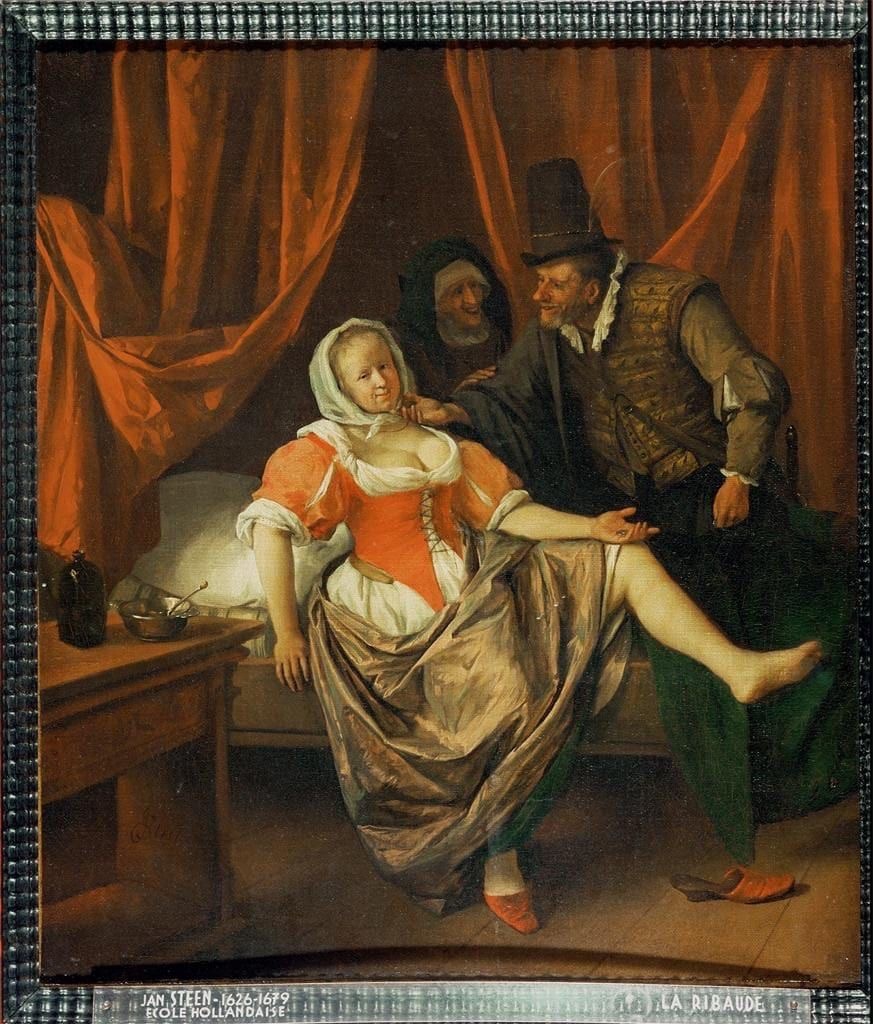
Let’s be honest: few figures have occupied more space in the human imagination than the whore.
Kings wrote laws about them. Priests preached sermons against them. Artists painted them. Writers filled novels with them. Politicians condemned them in public and sought them out in private. Entire civilizations have spent thousands of years obsessing over women they simultaneously desired, feared, condemned, and depended upon.
That obsession says far more about society than it does about the women themselves.
From the temples of ancient Mesopotamia to the brothels of medieval Europe, from the courtesans of Renaissance Italy to the red-light districts of modern cities, sex workers have existed in nearly every known civilization. Historians often refer to prostitution as “the world’s oldest profession”—a phrase that isn’t entirely accurate, but one that reveals how deeply rooted sex work is in human history.
Ancient societies had complicated relationships with prostitution. In some places, sex workers held respected positions. Certain Greek courtesans were educated women who entertained philosophers and statesmen. In Japan, elite courtesans and entertainers could become cultural icons. In Renaissance Europe, famous courtesans sometimes wielded influence that respectable wives could only dream about.
Yet admiration was always mixed with condemnation.
Society developed a peculiar habit: men wanted access to these women while simultaneously punishing them for providing that access.
It is one of history’s oldest hypocrisies.
Religious texts warned against them. Governments regulated them. Communities shamed them. Yet demand never disappeared. For centuries, people treated prostitution the way they treated rain—complaining about it while accepting that it was never going away.
The fascination wasn’t merely sexual. Whores represented something larger. They embodied freedom, temptation, danger, independence, survival, rebellion, and sometimes desperation. They existed outside the traditional expectations placed upon women, and that alone made them subjects of endless curiosity.
Writers certainly couldn’t leave them alone.
From ancient literature to modern novels, the prostitute appears again and again. Sometimes she is portrayed as a tragic victim. Sometimes a heartless seductress. Sometimes a survivor navigating a world that offered women very few economic choices. Rarely was she allowed to simply be human.
Instead, society turned her into a symbol.
And humans love symbols.
The irony is that many of the same societies that harshly judged sex workers offered women limited opportunities to earn money independently. When women had few legal rights, little access to education, and restricted employment options, some turned to sex work because it provided one of the few paths to economic survival.
Yet history often judged the woman far more harshly than the conditions that produced her circumstances.
That pattern still echoes today.
Modern conversations about sex work remain deeply divided. Some view it as exploitation. Others view it as labor. Many recognize that the reality is often more complicated than either side wants to admit. Human lives rarely fit neatly into political slogans.
What has remained remarkably consistent is society’s fascination.
Movies, television shows, novels, songs, true crime stories, and celebrity scandals continue to center sex workers and the idea of prostitution. The subject captures attention because it sits at the intersection of sex, power, morality, money, and human desire—topics that have fascinated people since the first cities rose from the earth.
Perhaps that is why the figure of the whore has endured for thousands of years in our collective imagination.
Not because she is uniquely mysterious.
Not because she is uniquely sinful.
But because she reflects humanity’s deepest contradictions.
For centuries, people have looked at whores and seen whatever they wanted to see: temptation, freedom, corruption, survival, independence, victimhood, power.
In the end, the fascination may have never been about the whores at all.
It may simply be that when society looks at them, it catches an uncomfortable glimpse of itself.


Leave a Reply