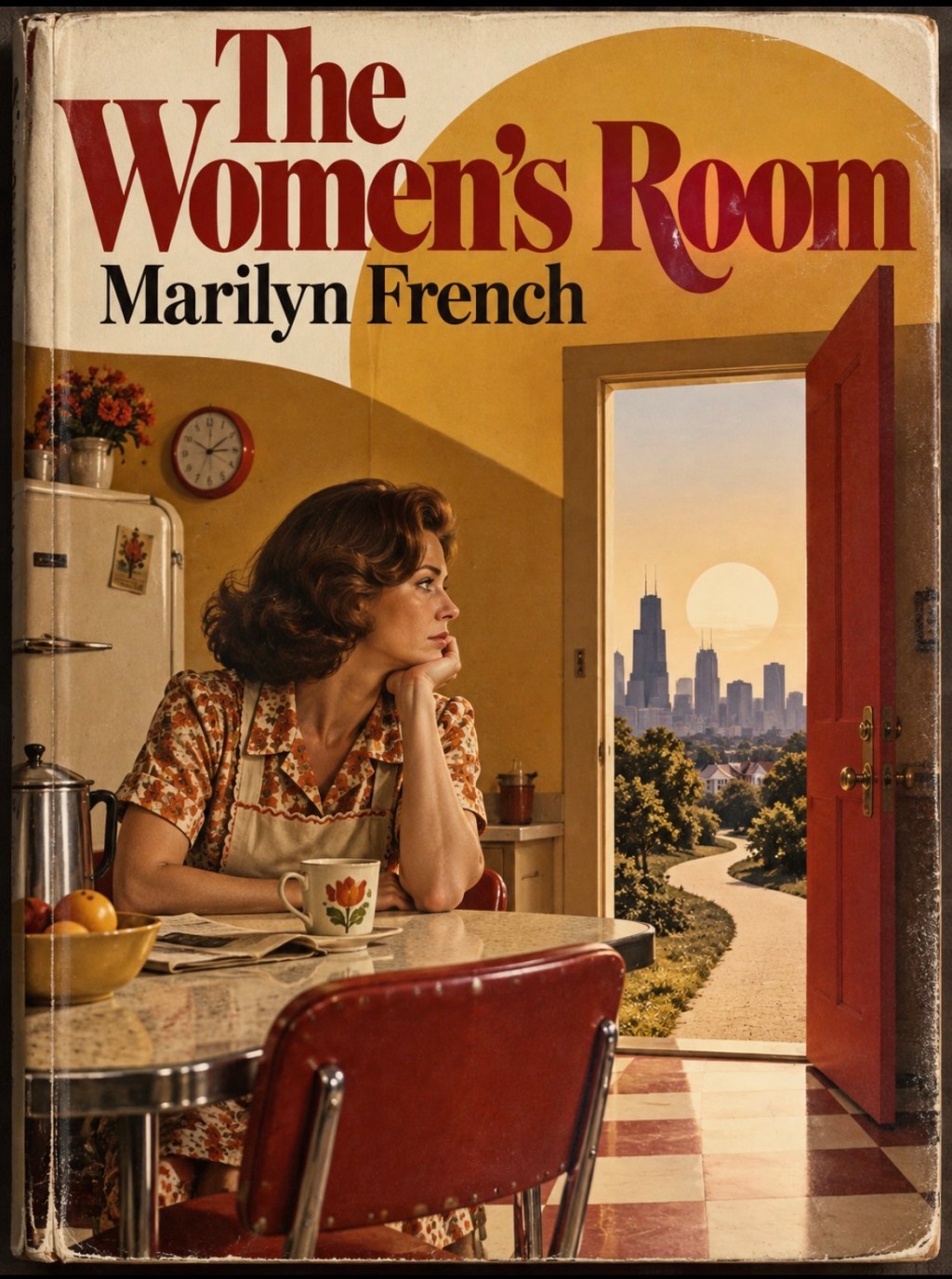
I became a feminist back in 1996 after reading The Women’s Room by Marilyn French, a groundbreaking novel originally published in 1977. That book forever changed the way I viewed womanhood, marriage, motherhood, and society’s expectations of women.
And nearly thirty years later, I still consider it one of the most influential books I’ve ever read.
The novel follows Mira Ward, an intelligent young woman growing up in an era when a woman’s greatest achievement was supposedly finding a husband, having children, and maintaining a beautiful home.
Mira eventually marries Norm, a physician, and becomes the mother of two sons. Like millions of women during the 1950s, she does what society tells her she’s supposed to do. She puts her own dreams and ambitions on the back burner while dedicating her life to her husband, children, and household.
From the outside, Mira appears to have achieved the American Dream. A successful husband, children, a comfortable suburban home, and financial security.
But behind those walls, she’s miserable.
She’s lonely, intellectually unfulfilled, emotionally neglected, and increasingly aware that somewhere along the way, she has lost herself.
And she’s not alone.
Throughout the novel, we’re introduced to other women whose seemingly respectable marriages conceal infidelity, emotional abuse, depression, resentment, and desperation. These women have followed the rules, sacrificed their ambitions, and devoted themselves to their families, only to discover that the happiness they were promised was often an illusion.
Eventually, Mira’s husband divorces her, leaving her emotionally devastated. After years of defining herself through marriage and motherhood, she struggles to understand who she is without them.
But her story doesn’t end there.
Mira eventually returns to school, pursuing graduate studies at Harvard, where she meets a group of politically conscious women, including Val, a radical feminist who challenges everything Mira has been taught about relationships, sexuality, marriage, and male power.
Through these friendships, Mira begins to understand that her unhappiness wasn’t simply a personal failure. It was connected to a much larger social system that had taught generations of women to measure their worth through their usefulness to men.
She begins reclaiming her identity, her sexuality, her intellectual ambitions, and, most importantly, her autonomy.
Even when she eventually enters another romantic relationship, she refuses to sacrifice her independence and ambitions to accommodate another man’s expectations.
And that, right there, was the lesson that stayed with me.
Marilyn French pulled back the curtain on the carefully manufactured illusion of the happy, contented 1950s housewife.
You know the image.
The smiling woman in the pretty dress, standing in her spotless kitchen, preparing dinner for her hardworking husband while their perfectly behaved children played nearby.
According to the television shows, advertisements, and popular culture of that era, these women were living the dream.
But whose dream was it?
What happened to the women who wanted an education? A career? Financial independence? The freedom to remain unmarried or childfree? What happened to women who loved their children but hated the limitations placed upon their lives?
And what happened to the women who simply wanted to be recognized as complete human beings rather than somebody’s wife or mother?
Those were the questions that The Women’s Room forced me to confront.
It also helped me understand the conditions that fueled second-wave feminism during the 1960s and 1970s.
Contrary to what some people would have you believe, the women’s liberation movement wasn’t simply a bunch of angry women who hated men, marriage, and motherhood.
It was about women demanding the right to determine the direction of their own lives.
They wanted equal opportunities in education and employment, reproductive freedom, financial independence, legal protections, and the ability to exist as individuals outside the institution of marriage.
And they were tired of being told that wanting more made them selfish, unnatural, or somehow less feminine.
Now, here’s what I find particularly interesting.
In 2026, nearly fifty years after The Women’s Room was published, we’re witnessing a renewed romanticization of the very domestic arrangements that women of Mira’s generation struggled to escape.
The so-called traditional wife is once again being presented as the ideal woman, complete with the beautiful home, perfectly prepared meals, and a husband who supposedly provides everything.
And while there’s absolutely nothing wrong with a woman choosing that lifestyle, there’s a hell of a difference between having the freedom to choose a traditional marriage and being forced into one because society has denied you meaningful alternatives.
That’s the distinction people conveniently overlook.
I read The Women’s Room in 1996, and it opened my eyes to a history of women’s lives that I had never fully understood.
It taught me that oppression doesn’t always look like chains and locked doors. Sometimes it looks like a beautiful house, a wedding ring, and a lifetime of being told you should be grateful.
It taught me that motherhood and marriage should never require a woman to surrender her individuality.
And it taught me that a woman can love her family deeply while still wanting a life that belongs to her.
Most importantly, it taught me that women are human beings first, not supporting characters in somebody else’s story.
That’s why I became a feminist in 1996.
And that’s why I’m still one today.
Because I firmly believe that a woman’s life belongs to her.
Not her husband. Not her children. Not society. HER.


Leave a Reply